SRP
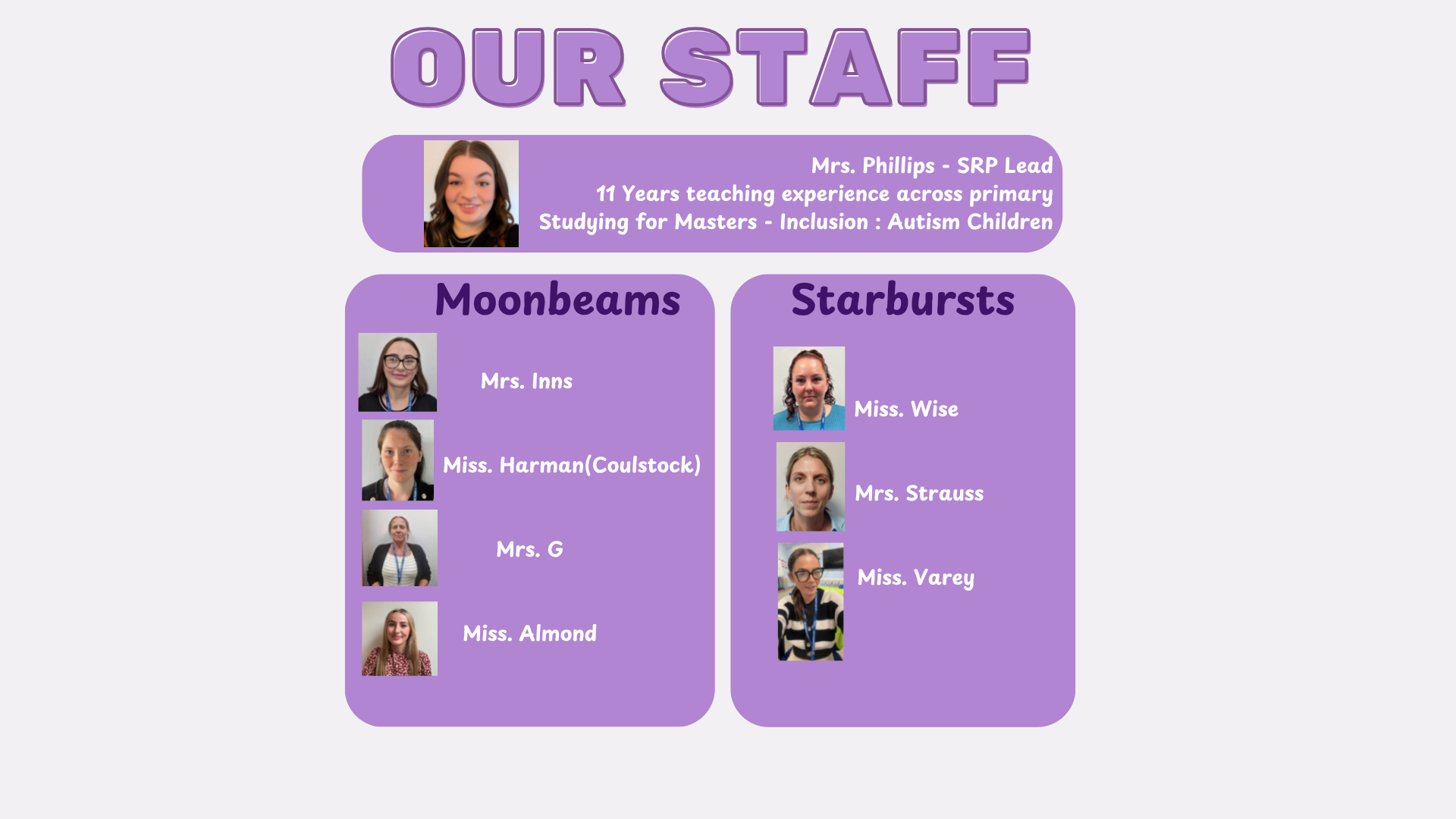
At Thistle Hill Primary School, we are proud to have a dedicated Specialist Resource Provision (SRP) supporting 20 autistic children from Reception through to Year 6. Our provision operates across two specialist classrooms, providing a nurturing, structured and inclusive learning environment for children with Education, Health and Care Plans (EHCPs) whose primary area of need is Autism.
Our SRP is designed to support children in developing the skills, confidence and independence they need to flourish both within school and beyond. We recognise that every child is unique, with their own strengths, interests, communication preferences and individual needs. We therefore provide a highly personalised approach to learning, ensuring that every child is supported, challenged and celebrated as an individual.
Our Approach to Learning
Within the SRP, we provide a broad, engaging and adapted curriculum that combines academic learning with the development of essential life skills. Learning opportunities are carefully planned to meet children’s individual developmental needs, drawing upon the National Curriculum, personalised EHCP outcomes and specialist approaches to teaching autistic learners.
Our provision places particular emphasis on:
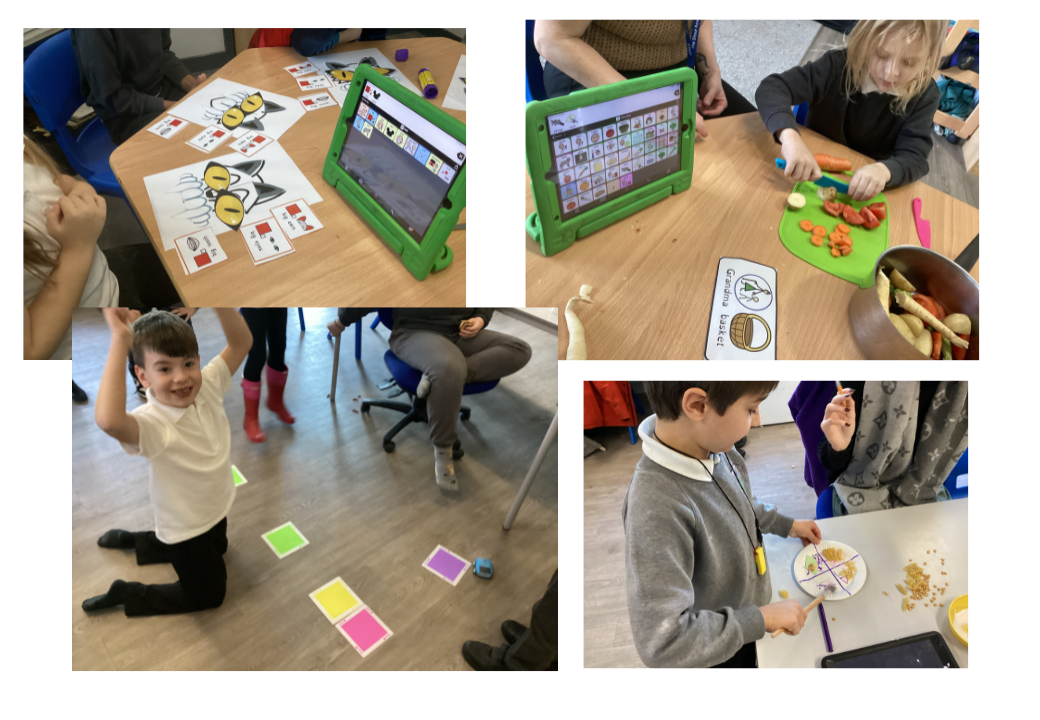
- Communication and Interaction: Developing children’s ability to communicate, express their needs, make choices and build meaningful connections with others. We use a total communication approach, incorporating visuals, symbols, Augmentative and Alternative Communication (AAC), and spoken language where appropriate.
- Emotional Regulation and Wellbeing: Supporting children to recognise, understand and communicate their emotions, develop personalised regulation strategies and feel safe, understood and ready to learn.
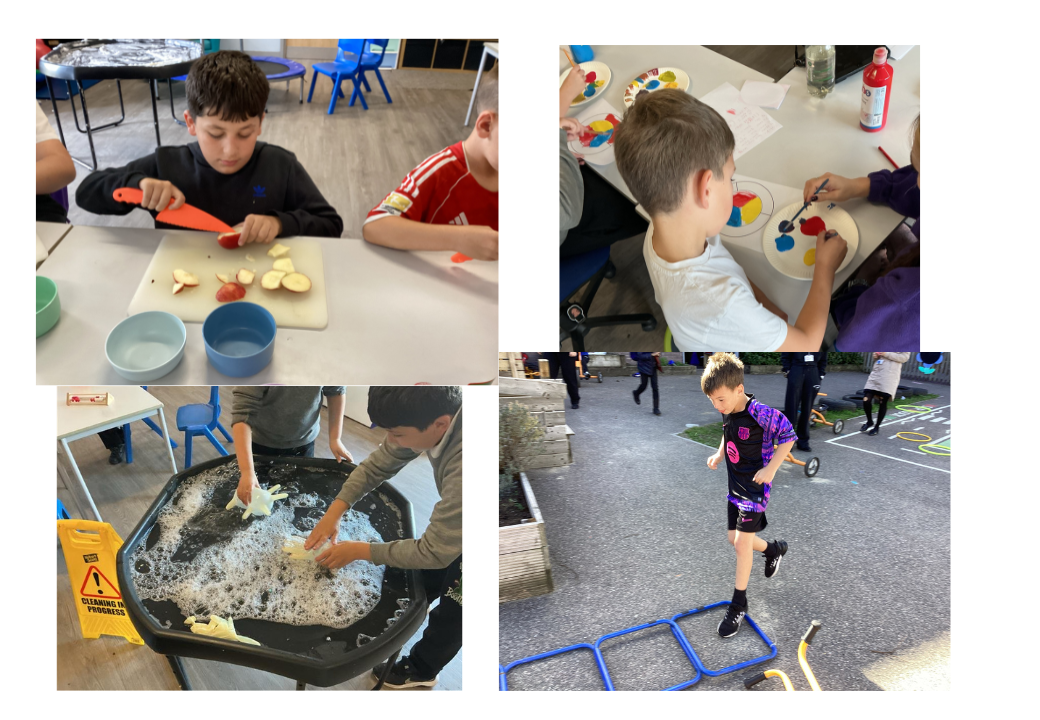
- Sensory Development: Recognising and responding to individual sensory differences through sensory activities, movement opportunities, environmental adaptations and access to appropriate regulation resources.
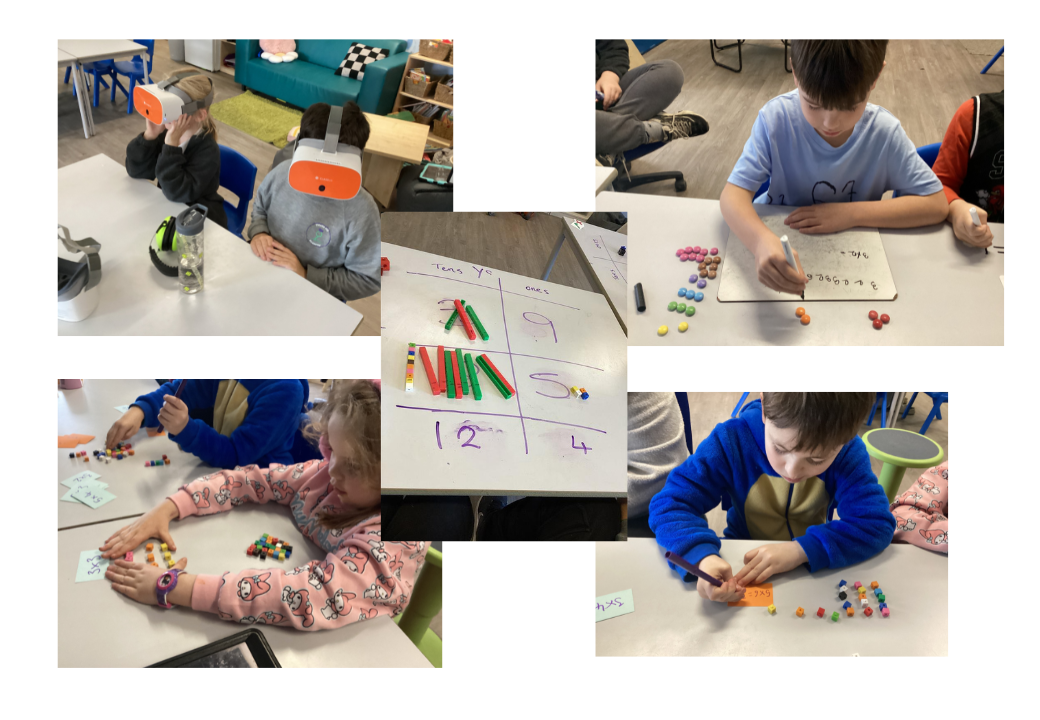
- Cognition and Learning: Providing carefully adapted teaching, practical experiences, structured learning opportunities and individualised support to help children develop their knowledge, understanding and academic skills.
- Independence and Life Skills: Building confidence in everyday routines, personal care, decision-making, problem-solving and the practical skills needed for increasing independence.
- Social Development and Relationships: Creating meaningful opportunities for children to develop friendships, participate in shared experiences, explore social situations and build positive relationships with peers and adults.
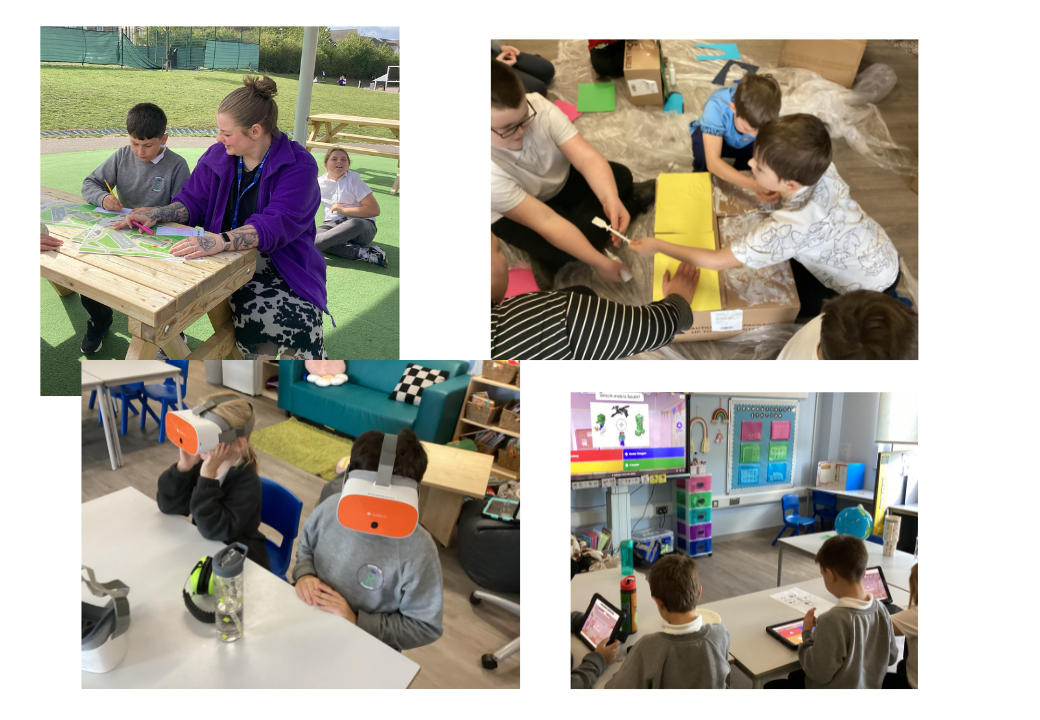
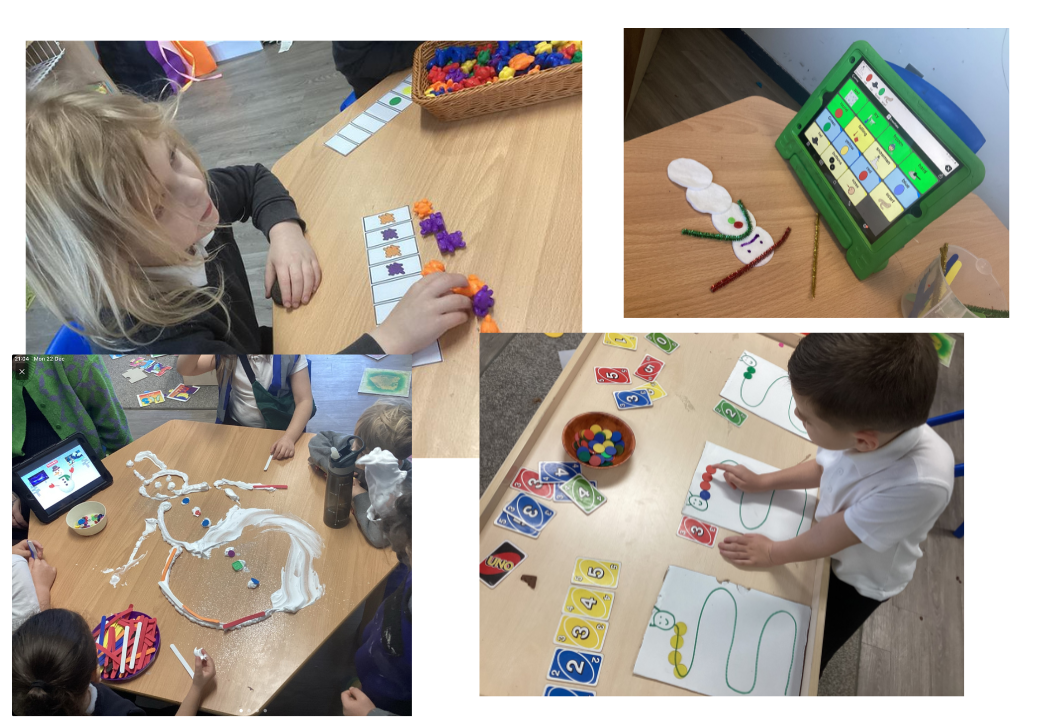
We recognise that learning takes many forms. Alongside structured teaching, our children benefit from play-based exploration, sensory experiences, outdoor learning, practical activities and opportunities to develop their interests. We celebrate progress in all its forms, recognising that small steps can represent significant achievements.
Inclusion and Belonging
Our SRP is an integral part of Thistle Hill. We believe that every child should feel valued, included and connected to the wider school community.
Children are supported to access mainstream classrooms, shared learning experiences, assemblies, playtimes, school events, trips and extracurricular activities where appropriate to their individual needs. We recognise that inclusion looks different for every child and work carefully to ensure that opportunities for participation are meaningful, positive and successful.
Our aim is not simply for children to access mainstream environments, but to develop the confidence, communication, regulation and independence skills that allow them to participate in school life in ways that work for them.
A Nurturing and Supportive Environment
Our practice is underpinned by the Six Principles of Nurture, which recognise the importance of positive relationships, emotional wellbeing and a safe, supportive environment in helping children to learn and develop.
These principles are:
- Children’s learning is understood developmentally.
- The classroom offers a safe base.
- Nurture is important for the development of wellbeing.
- Language is a vital means of communication.
- All behaviour is communication.
- Transitions are significant in children’s lives.
These principles guide our daily practice, helping us to create a predictable, supportive and understanding environment in which children feel secure enough to explore, communicate, take risks and develop new skills.
Working Together
We recognise the importance of strong partnerships between school, families and other professionals. By working collaboratively, we aim to develop a shared understanding of each child’s strengths, needs and aspirations, ensuring that support is consistent, meaningful and responsive.
Above all, our SRP is a place where children are understood, accepted and encouraged to be themselves. We are committed to helping every child develop a love of learning, celebrate their achievements and build the skills they need for a happy, confident and increasingly independent future.
Our Learning Pathways
Best for: pupils at an early developmental level who benefit from a highly sensory, communication‑rich approach.
The Launch Pathway focuses on building foundational skills for learning through highly structured, sensory and communication‑based experiences.
Key areas include:
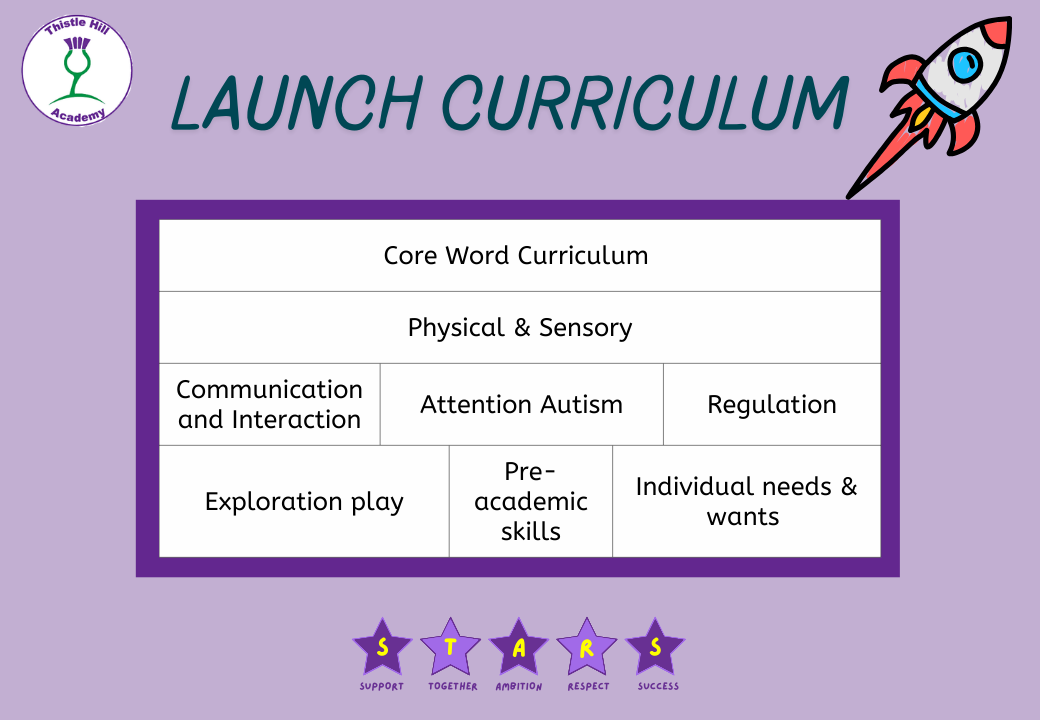
- Core Word Curriculum – developing basic functional vocabulary.
- Physical & Sensory development – supporting regulation and readiness to learn.
- Communication & Interaction – early communication, including AAC where needed.
- Attention Autism – developing focus and shared attention.
- Regulation strategies – helping pupils understand and manage their sensory needs.
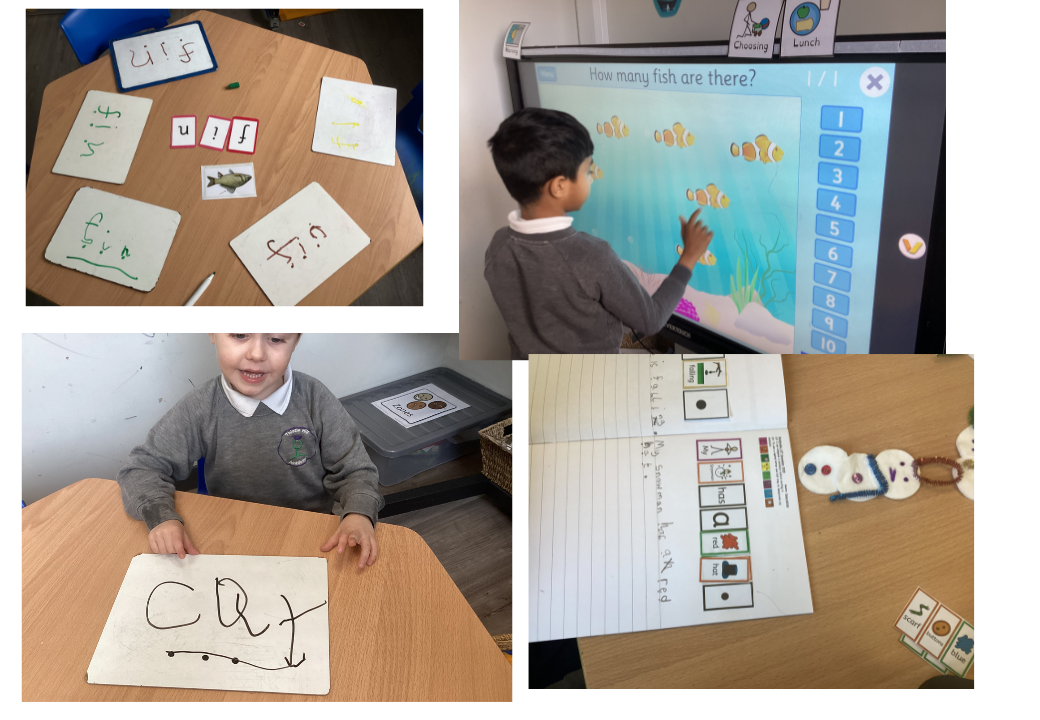
- Exploration Play & Pre‑academic skills – hands‑on learning to develop early cognition.
- Individual needs & wants – personalised targets forming a central part of daily learning.
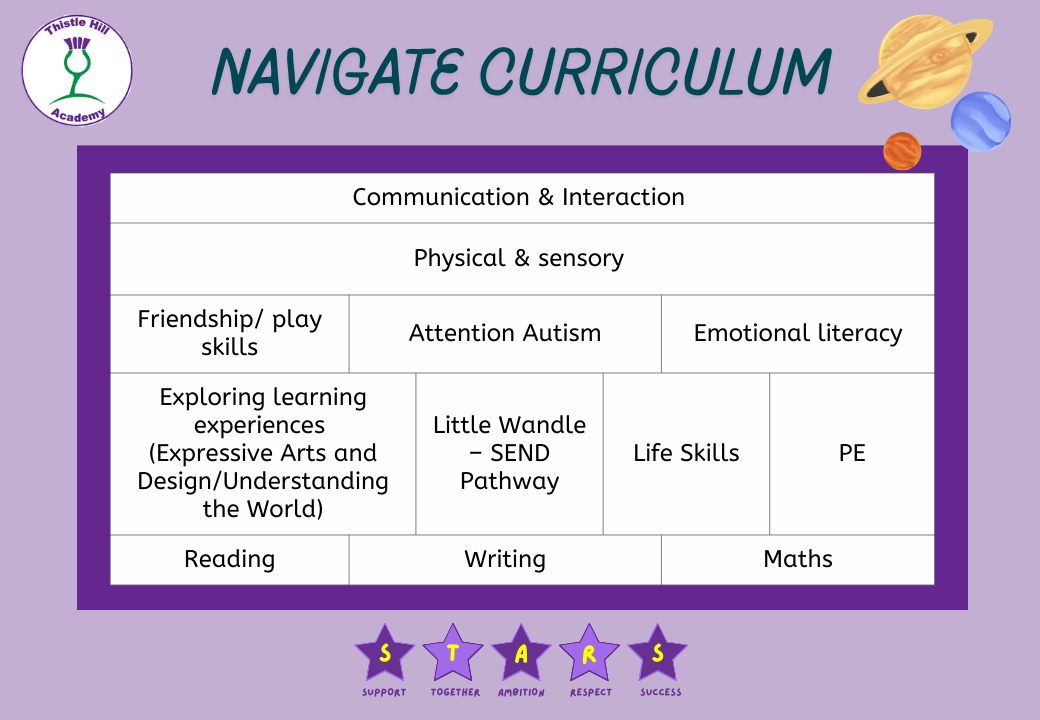
Best for: pupils who are beginning to engage more intentionally with structured learning and social experiences.
The Navigate Pathway blends sensory approaches with early literacy, numeracy and life‑skills learning.
Key areas include:
- Communication & Interaction – developing meaningful communication and conversation.
- Physical & Sensory – ongoing support for regulation.
- Friendship & play skills – supporting social connection and cooperation.
- Attention Autism – further developing focus and engagement.
- Emotional Literacy – learning to name, recognise and respond to emotions.
- Exploring learning experiences – developing creativity and understanding of the world.
- Little Wandle SEND Pathway – structured early reading instruction.
- Life Skills & PE – building independence and physical development.
- Reading, Writing & Maths – starting to engage with early academic skills.
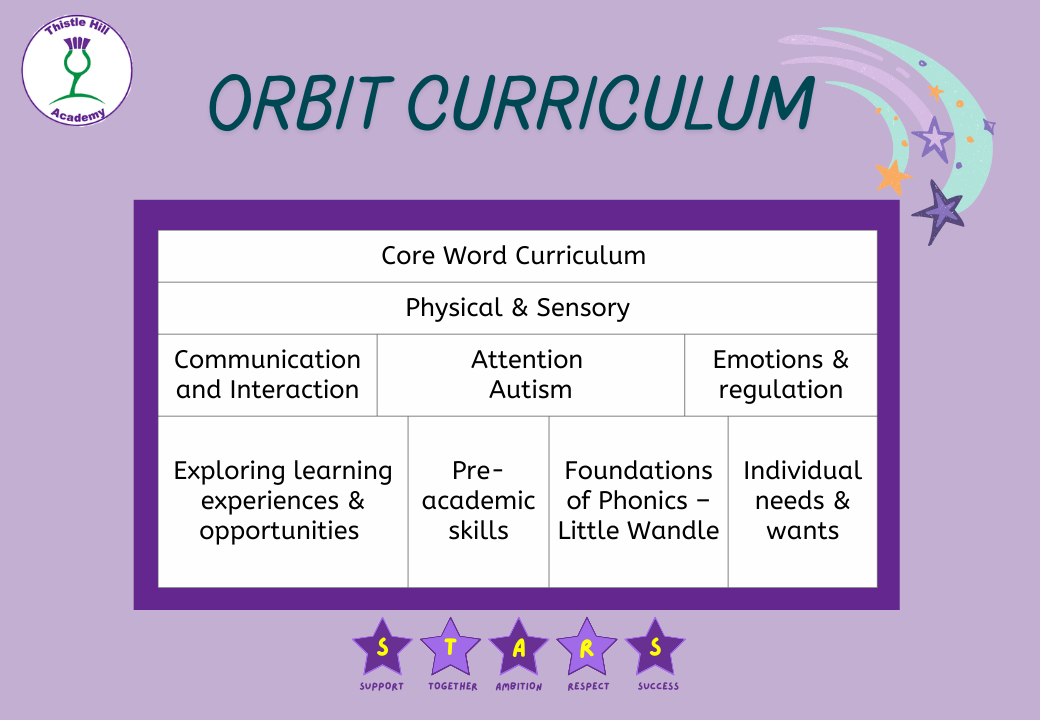
Best for: pupils ready to engage with a broader range of structured learning while still requiring sensory and communication‑led support.
The Orbit Pathway expands cognitive and academic learning while maintaining a strong focus on communication and emotional regulation.
Key areas include:
- Core Word Curriculum – building functional language.
- Physical & Sensory – integrated sensory support for learning.
- Communication & Interaction – developing expressive and receptive communication.
- Attention Autism – sustaining concentration and anticipation.
- Emotions & Regulation – understanding feelings and strategies to stay regulated.
- Exploring learning experiences – practical exploration of new ideas and environments.
- Pre‑academic skills – readiness for more formal learning.
- Foundations of Phonics – Little Wandle – early reading foundations.
- Individual needs & wants – personalised elements supporting each child’s profile.
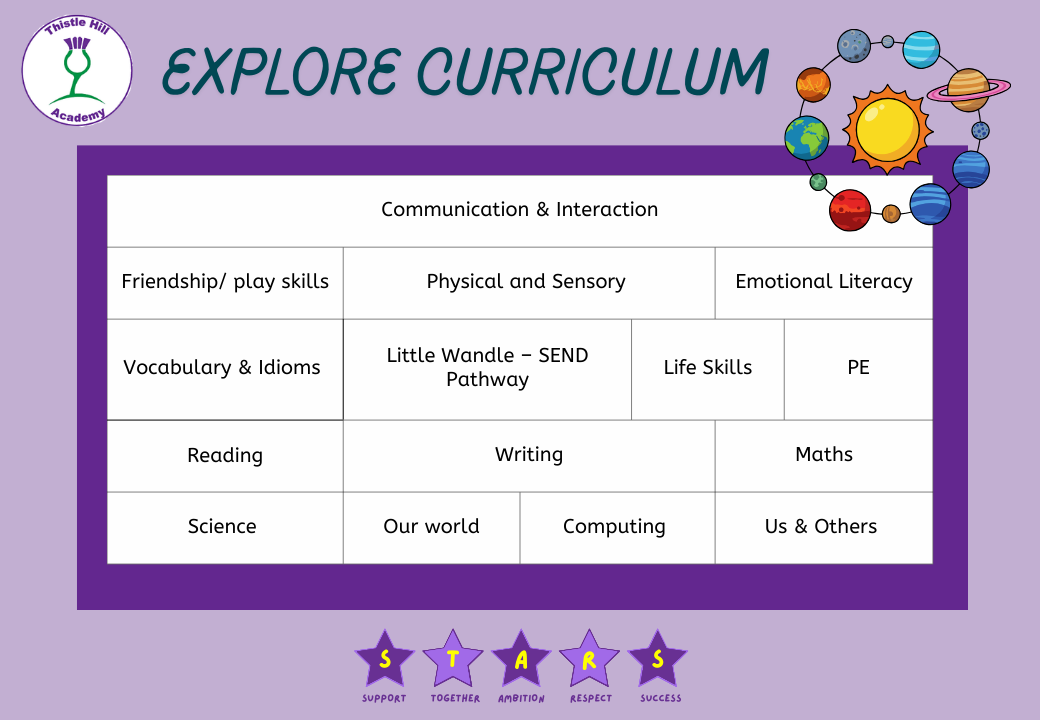
Best for: pupils who can access a wider subject curriculum with adapted support and specialist teaching approaches.
The Explore Pathway offers a rich, broad curriculum similar to mainstream subjects but delivered with SEND‑specific support.
Key areas include:
- Communication & Interaction – language, vocabulary and social communication.
- Physical & Sensory – sensory strategies embedded throughout learning.
- Emotional Literacy – understanding self and others.
- Friendship & play skills – social learning and cooperation.
- Vocabulary & idioms – expanding language for daily life and learning.
- Little Wandle SEND Pathway – structured reading support.
- Life Skills & PE – practical independence and physical development.
- Reading, Writing & Maths – core academic subjects.
- Science, Computing, Our World & Us & Others – exploring wider curriculum subjects in an accessible way.