Speech, Language, and Communication
Speech
We are committed to identifying and intervening with children with an identified speech need. This is through work on a 1:1 basis with children. We work on speech sound development using a range of strategies:
- Cued articulation
- Language through colour
- Play based games.
The aim of these interventions and strategies are to give children the skills they need to be able to communicate with their peers and adults.
Language
Working with children 1:1 and small group focussing on language development. Language needs are identified through classroom observations and the Language Link assessment.
We use a mixture of resources like Language for thinking, Pictoys and black sheep press, which are used by the NHS, as well as visuals to support play based games.
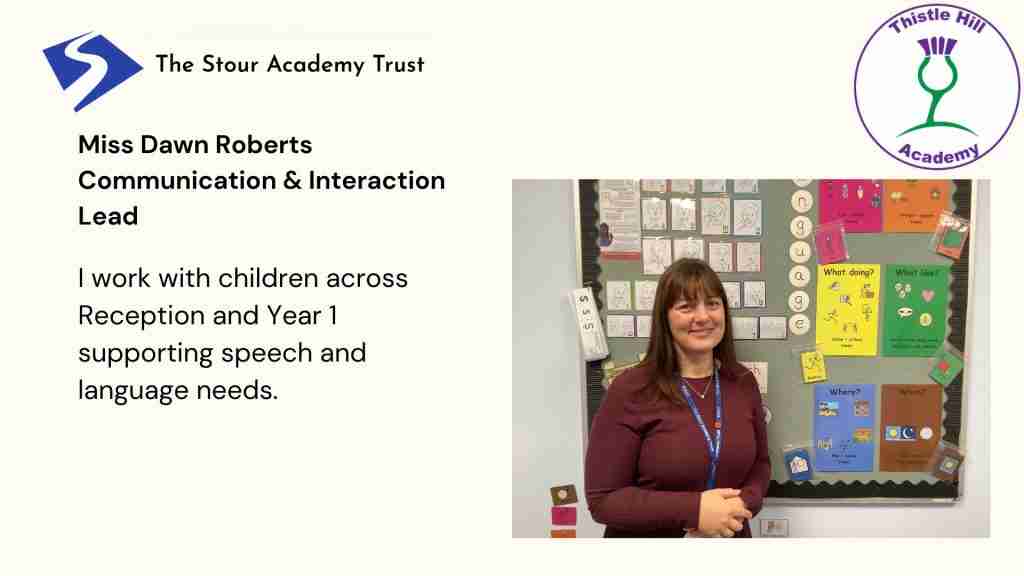
Speech and Language TA
Our Speech and Language Teaching Assistant plays a crucial role in supporting our children with speech, language and communication barriers.
- Individualised Support: Working closely with teachers and our Trust speech and language therapist to support with early identification and intervention. Carrying out observations and assessments that support the identification of specific speech and language needs of each child.
- Providing tailored interventions: Creating a plan for bespoke interventions based on the child’s needs, ensuring that support is personalised and effective.
- Working collaboratively: Working with outside agencies, such as NHS speech therapists, to implement strategies recommended for each child. Holding and attending meetings with parents, teachers and other professionals to discuss a child’s progress and adjust support as needed.
- In-class support: Working alongside teachers to provide in-class support, facilitating communication and ensuring that the learning environment is inclusive. Providing teachers with additional or adapted resources to support children in their classroom provision.
- Use of visual aids and technology: Using visual aids to enhance understanding, like pictures, charts, and diagrams to support language comprehension, and where appropriate, the use of assistive technology tools.
- Encouraging communication: Creating opportunities for children to communicate with their peers, fostering social interaction and language development. Providing positive reinforcement and encouragement to children as they express themselves, building their confidence and motivation.
- Monitoring progress: Collecting data on the progress of each child, helping to evaluate the effectiveness of interventions and make necessary adjustments.